A lift-top coffee table can bring dinner closer, but it only helps if you can sit comfortably, get up with the top open, and reset the room afterward. Before replacing your current table, test that full routine. A raised surface is not automatically a dining table that fits your sofa.
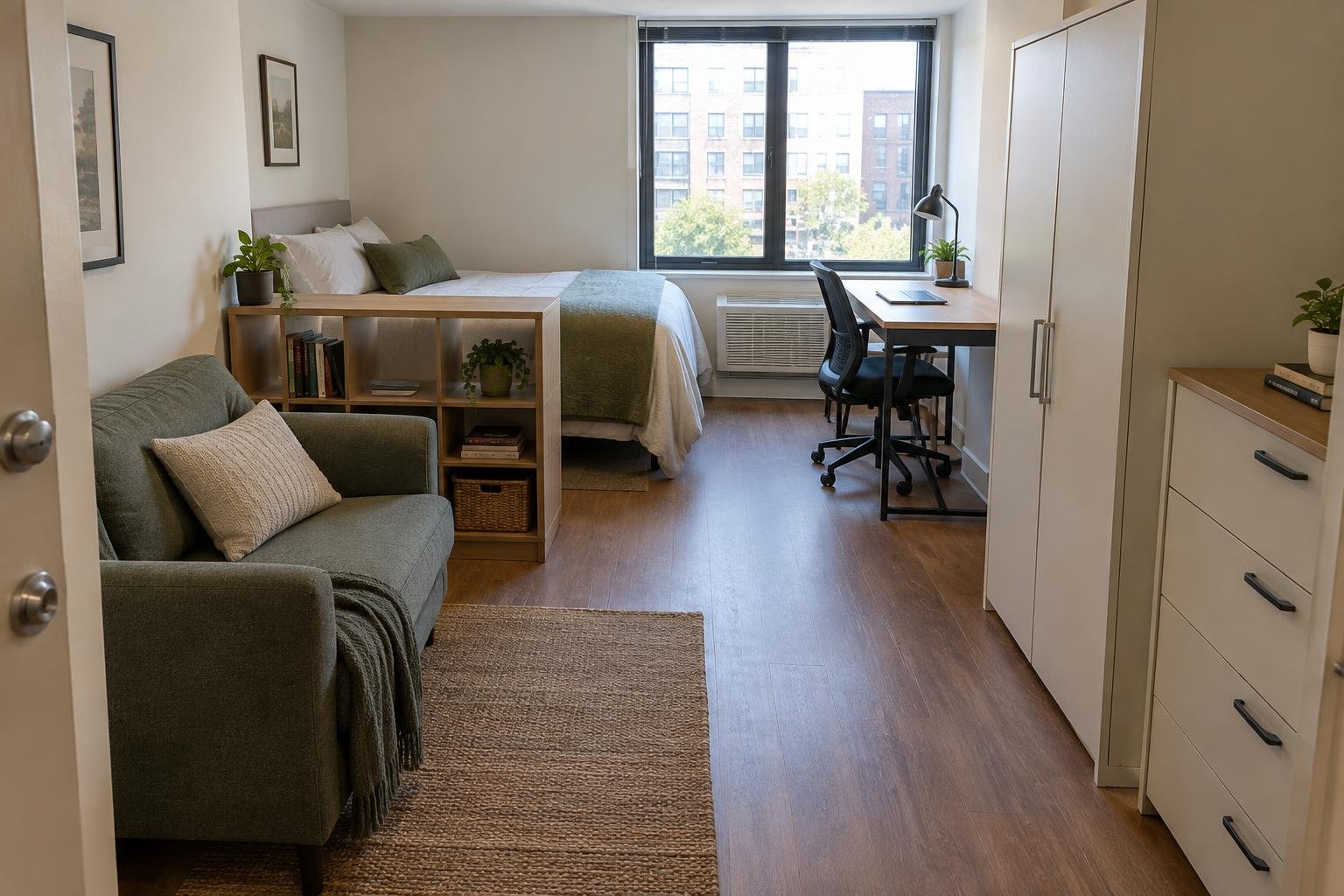
Compare the closed and raised scenes below, then use the six-step check with your own seat. These are AI room concepts informed by a documented lift mechanism, not measured installations or exact product photographs.

The product example—and the question still unanswered
Our reference is IKEA ÖSTAVALL, black, article 405.341.52. Its US listing shows a 35⅜-inch length, 23⅝–24¾-inch width and 18⅞–24¾-inch height range. The raised top uses pivoting supports, a lock and gas-spring assistance; the official assembly guide shows how those parts connect.
Purchase recommendation on hold: the US page lists a 22lb adjustable-top limit, but its linked assembly guide, AA-2407462-4, page 19, shows 33lb on the raised top. We have not resolved which applies to the current black US item. Ask IKEA to reconcile the article number and guide revision before buying. Do not select the higher number or infer that a person can lean or sit on it.
The US page displayed $199.99 on October 30, 2026. Delivery and store stock depend on location and were not confirmed. The link is a non-affiliate manufacturer reference. No matching approved Amazon affiliate offer is linked.
1. Sit where you really eat
Sit in your usual place with the cushions arranged as they are most evenings. Measure seat height with your weight on the cushion, not from the unoccupied sofa. Note the top of your knees, your comfortable reach and the side you use to get up. If you plan to use a chair instead, repeat the check with that chair; its seat height and posture may be different.
Table height is not knee clearance. Ask for the distance from the floor to the lowest obstruction under the raised top, and the clear depth and width between the storage box, supports and moving parts. A floor-to-base measurement describes space below the furniture, not a place for your knees. Those usable knee-space dimensions are not established by the published overall sizes here.
2. Open the table before bringing dinner
Keep food, glasses and devices off the top while adjusting it. IKEA specifically says to clear the top before raising or lowering this model. Follow the exact item’s operating instructions and check that the raised-position lock engages. Keep fingers out of the moving joints and closing edges; do not treat a room illustration as an operating diagram.
At a showroom, rehearse the movement with an empty top and your actual sitting position as closely as possible. Check whether the top travels toward you, whether the box prevents you from bringing it close enough, and whether you can operate it without twisting across the seat. Do not buy on raised height alone.

3. Eat without making the sofa work against you
Once the top is stationary and secured as directed, check whether an empty plate can sit within comfortable reach while your feet remain supported. Try your normal utensils and posture. If you need to perch on the cushion edge, shrug your shoulders or press your knees against the box, this is not a comfortable everyday dining setup for you.
Include a drink and the amount of tableware you normally use when assessing surface area, but do not load an unverified setup as a test. The unresolved load rating above must be clarified for this model. The room image’s plate communicates the intended activity; it is not a load test or a claim that your sofa will fit.
4. Get up while the top is still open
Before using a real meal, rehearse standing up with the table empty and secured in its raised position. Use your usual exit side and walk toward the kitchen. Check the other seat, nearby door, drawers and rug edge too. Overall open width does not tell you how much space remains in your particular room.
If you must lower the top every time you stand, remember what that means during dinner: clear the dishes, release and lower the table according to its instructions, then open and set it again. If you get up often, that repeated reset may outweigh the convenience of a higher surface. Do not push down on the top to help yourself stand.
5. Clear dinner, then close
Put dishes and drinks on a stable surface away from the moving table. Use the release and lowering procedure in the product instructions; do not force a stuck mechanism or remove its lock. Watch hands, clothing and anything stored near the moving parts. Stop using a mechanism that is loose or damaged until the manufacturer advises how to address it.
6. Return the room to everyday use
Check the room again with the top closed: the usual route, access to seating, and the space you need for cleaning. A storage compartment helps only if you can reach it without having to relocate dinner or decorations every time. Decide where the items removed from the top will actually go.
The room should still be somewhere you want to spend the evening. Here, a rust sofa, pink walls and a navy patterned rug carry the look while the dark table stays visually simple. Keep those larger anchors and clear one useful surface rather than buying several small pieces without a parking place.
Try the table you already own first
If your existing coffee table is comfortable for a short meal and you can stand without moving it, there may be no reason to replace it. Test with an empty plate first. A tray can make clearing easier on a stable, suitable surface, but it will not fix a height or reach problem.
If the low table makes you hunch, try a stable side table you already own only if it suits the intended use. Check its surface, base and parking position. A pull-in C table does not necessarily fit under a sofa; the legs, frame and rug can stop it. Avoid stacked risers, loose boards or a tray balanced across soft cushions. Using an existing dining table is a valid no-purchase outcome.
If you mainly need a spot for a cup and remote rather than a full meal, compare one C-table with two small tables. That guide checks the sofa fit, reachable surfaces and where the tables go when you need the floor back.
When not to buy
Skip a lift-top if you cannot try or establish usable knee space, the open top blocks your normal exit, you dislike clearing everything before each adjustment, or the mechanism and load instructions do not match the exact option being sold. A good-looking closed table is not enough to settle those questions.
Your decision: keep what you own if the routine already works; consider a lift-top only after the seated fit, open-table exit and daily reset work for you. For the ÖSTAVALL example, request the applicable load rating and usable raised knee-space dimensions before making a purchase.
Why this question matters
The existing customer discussion about lift-up coffee tables includes a search-indexed complaint about needing to close the table to get up repeatedly. It is a concrete use question, not proof that everyone has the same experience; the poster’s location was not verified.
Separately, Apartment Therapy’s 275-square-foot Manhattan rental tour shows a resident opening a coffee table in a carefully styled home. That home also has a dining area, so it is not evidence that the resident relies on sofa dining. Our room scenes are independent AI concepts.
This guide compares buying and daily-use decisions; it does not replace the manufacturer’s instructions or an in-person fit check. No affiliate purchase link is included.