


Clearing a spot for a mat creates a second question: where does the coffee table go? If it blocks a door, needs another person to lift it, or takes too much effort to reset, the empty floor in a picture is not much help.
These two AI layout concepts compare a room you clear for a session with a seating arrangement that leaves a separate patch of floor. They are not measured plans or evidence that a particular movement fits.
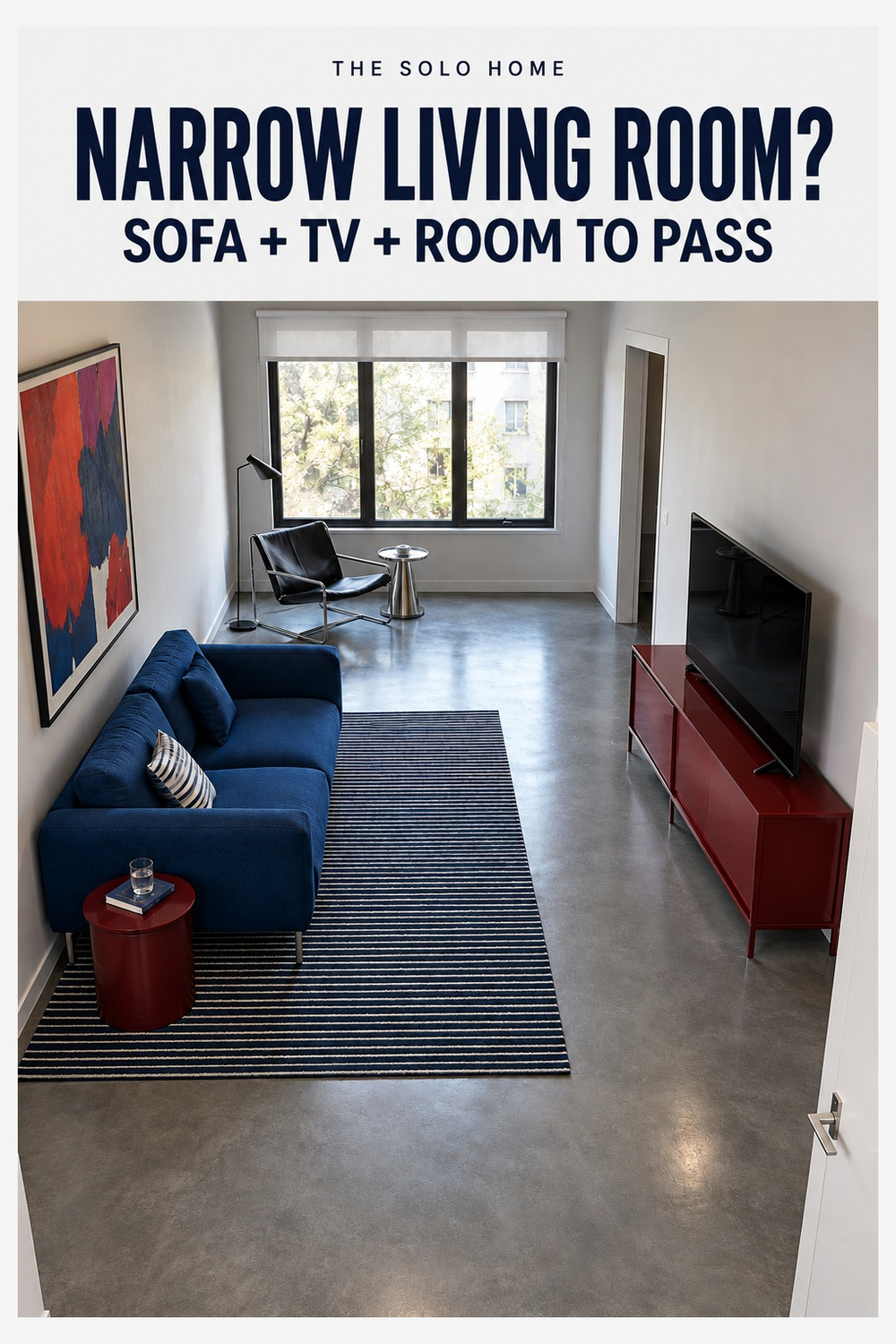
A: Keep the sofa on the side wall; park the table
The sofa stays against the left wall and the armchair stays at the back right. The table moves beside the window, leaving the center for the mat. In everyday mode, the table can return in front of the sofa after the mat is rolled away.
Choose this if: you like the existing seating and have a real parking spot that does not take over another route. The trade-off: you have to move the table and its contents each time. A metal-looking table is not necessarily light; check the actual weight, grip and floor protection. If you cannot comfortably move your table, this is not a suitable daily reset.
B: Group the seats at the back; leave a mat zone toward the front

The sofa moves beneath the rear window and the chair moves toward the left. The table remains with the seating group. The mat shifts toward the front-left, while the entrance is on the right.
Choose this if: reducing daily furniture moving matters more than spreading the seats through the room. The trade-off: the chair and nearby wall may limit movement beside the mat. Window access also changes. If you need to move the chair every time, count that honestly as setup work. Do not assume the floor strip visible on the right is wide enough for your household.
Check the room in use, not just the mat outline
- Measure your own mat, furniture and doorway. A mat footprint alone does not describe the space your chosen activity uses.
- Mark a table parking position and open nearby doors and drawers. Check window handles, curtains, vents and any heater before relocating seating.
- Account for your hands, feet and body beyond the mat edges. Look for furniture corners, glass and overhead objects. This article does not prescribe exercises or establish safe movement clearance.
- Walk from the entrance to the seats with the mat out. If another person must step across it, reconsider the layout or use the room at a different time.
- Time the complete reset, including cups, books, the table and the rolled mat. Choose the version you can repeat without help.
Use furniture as furniture. None of the pictured pieces has been tested as exercise equipment, and the images do not establish floor capacity, impact isolation or noise performance.
The question behind this comparison
A home-practice discussion includes a user who cannot move the coffee table alone every time. That practical obstacle is the reason to compare a temporary clearing with a more lasting rearrangement.
Yoga With Adriene’s small-space video is a separate reference for interest in practicing at home. It does not demonstrate or endorse either furniture layout here.
AI-generated interior concepts, not photographs of a measured installation. No specific product, dimension, structural capacity or safety performance has been verified. Check the actual room and furniture before rearranging.


1 thought on “Room for a Mat? Move the Coffee Table—or Move the Seating?”