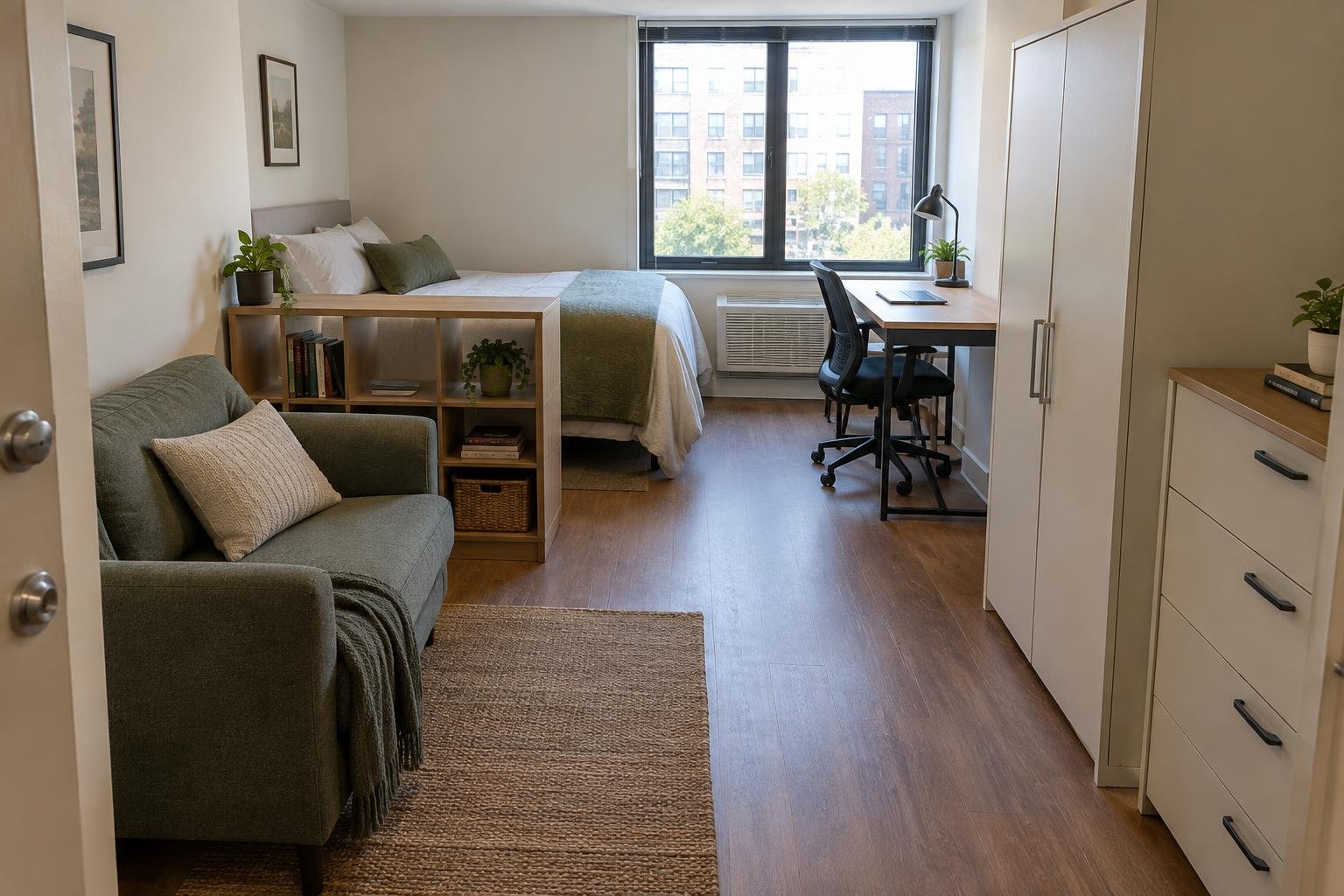
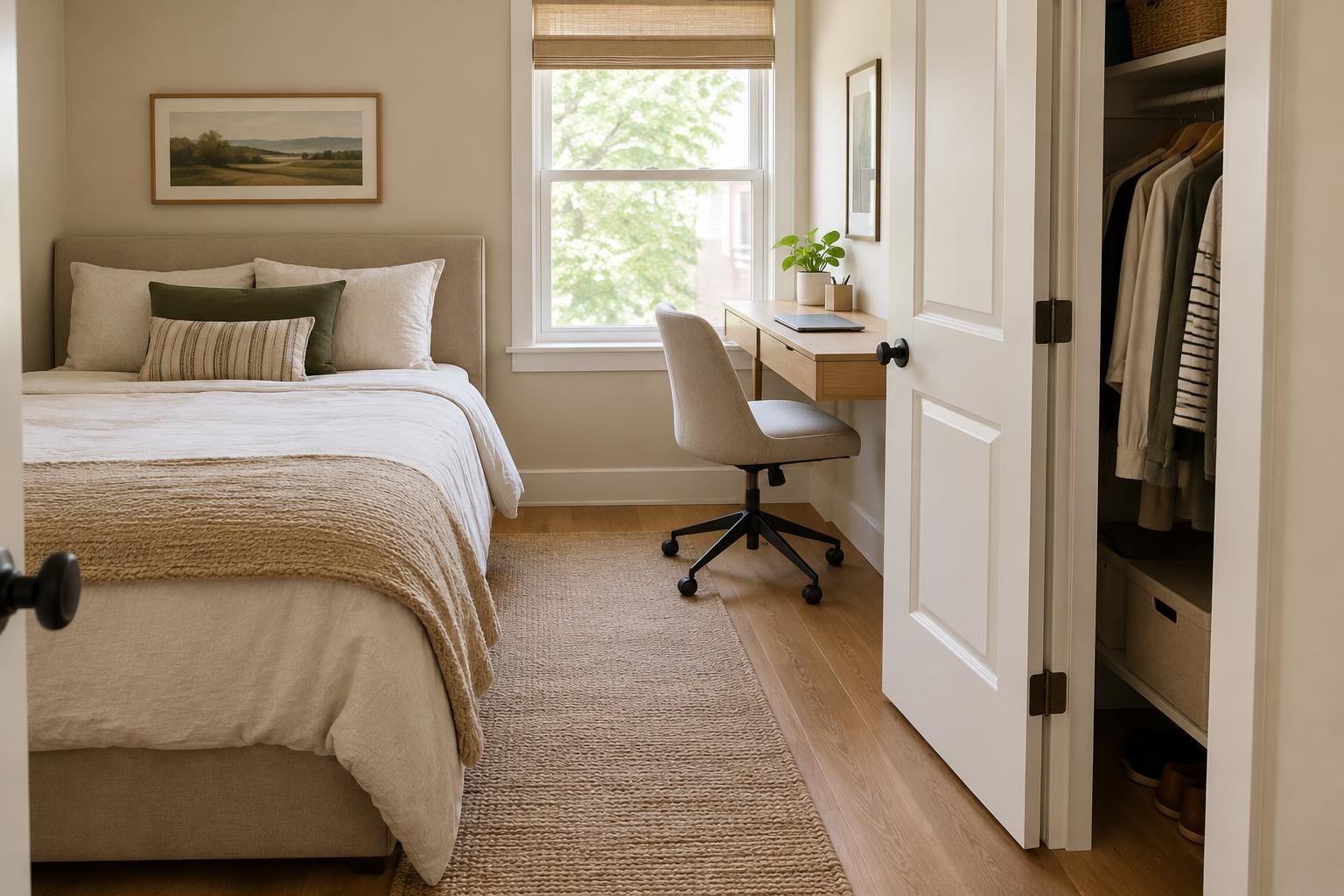
Add a reading light and a softer room glow without drilling. Compare a floor uplighter with a headboard clamp, using the same dresser lamp in both.
A: floor + dresser · B: clamp + dresser · Check real lamp examples

Try a lamp you already own first
Before shopping, move an existing table lamp onto a stable dresser or bedside surface near an outlet. Try it while sitting up in bed, then from the doorway. Can you reach the switch? Does the shade hide the bulb from your eyes? Is the book still in shadow? A better position may be all you need.
If the nearest surface is too crowded, leave the small bedside table for your book and glasses. The two options below add a light source without adding a wall fixture. Neither creates a new electrical outlet.
A. Floor + dresser: room light and a reading head

Choose this when you have a stable patch of floor near a usable outlet, clear of the door swing and your route out of bed. An uplighter directs light toward the ceiling; its separate reading head can point toward the page. The base, shade and adjustable head all need room, not just the thin pole.
Place it beside the headboard, with the base fully supported on hard, level floor. Keep the lamp and its cord clear of bedding, curtains and anything that moves. Sit down, stand up and reach for the switch before settling on the position. If the base takes over the walking route, try B instead.
Style it with an oatmeal quilt, a tobacco throw and dusty-rose cushions. The shaded dresser lamp gives another pool of light across the room. Use bulbs approved for your lamp; a warm-white color can suit winding down, but your actual room still needs enough light for the task.
B. Clamp + dresser: free the floor beside the bed

Choose this when the missing light is mainly for reading in bed and your furniture has a sturdy, accessible edge approved for the exact clamp. Measure the edge thickness and available grip area. Upholstery, rounded trim, fragile veneer or a loose headboard are not automatically suitable just because a clamp opens wide enough.
Place it on the solid wood edge, following the lamp instructions. Aim it toward the page and away from your face or a sleeping partner. Check that adjusting the neck does not loosen the grip, that the head stays away from fabric, and that the cord can reach without tension or crossing the bed or walking route. No drilling does not guarantee a mark-free furniture finish.
Style it with dusty blue, navy, a yellow cushion and a little coral. The focused reading light makes this a more task-oriented arrangement; the blue bedding itself does not make the lamp brighter. Keep the dresser lamp for ambient light—one small clamp light is not a replacement for a whole-room fixture.
Fit first. Choose the mood second.
Need more general light and have floor space? Start with A. Need a reachable reading light and have a compatible furniture edge? Consider B. If the actual cord cannot reach an outlet on a clear route, neither pictured placement is ready to copy. Move the lamp or furniture closer to power before buying.
You can put either palette with either setup. For a calmer evening look, borrow the oatmeal and rose textiles. For a clearer, more graphic feel, try blue and yellow. Compare the actual lamp’s light output and color temperature separately: a warm-white task light can still be useful for reading.
Two real products to compare with your room
These official US listings illustrate the two lighting types. They are not identified products from the room images. Check local availability and the exact instructions before ordering; ordinary product links below do not promise fit or lighting performance.
A: IKEA TÅGARP floor uplighter/reading lamp, black/white, 704.863.95. Listed height: 70 inches; base diameter: 8 inches; shade diameter: 9 inches. The cord is only 3 ft 3 in (about 1 m). It plugs into mains power, and the two lights switch independently. Bulbs are sold separately: the US page recommends an E26 and an E12 opal-white LED. Follow the markings for each socket and the assembly instructions.
B: IKEA NÄVLINGE LED clamp spotlight, white, 204.498.95. Listed length: 13 inches; cord: 6 ft 7 in (about 2 m). The current clamp manual specifies a 10–45 mm edge. It is a plug-in indoor light with a transformer and built-in, non-changeable LED—not a rechargeable or USB lamp. IKEA lists 220 lumens, 1.9 W and warm-white 2700 K; those specifications do not establish the light level at your pillow. Check the cord, transformer and clamp for damage.
A quick check before you move anything
1. Find the useful outlet. See whether an existing wall switch controls it, using a lamp you already own. Do not assume every room has a switched outlet or attempt wiring changes.
2. Measure the real route. Allow for the drop from the lamp and the run to the outlet. Keep cords out of foot traffic, away from rugs and from places where furniture or a closing door can pinch them. The CPSC home checklist covers these cord checks. An extension cord is not a substitute for missing fixed wiring.
3. Try an ordinary evening. Open the drawers, get into and out of bed, reach the switch and read a page. Check glare and the path to the door. Change the position if the lamp feels unstable, the clamp slips or the cord is pulled taut.
AI styling concepts; these pictures are not brightness measurements, battery tests or verified installations.
A different light problem?
If exterior light keeps you awake, compare two no-drill window-covering options. If the bedside surface itself is the problem, see a small table versus a clamp-on shelf.
The renter questions behind this idea
A renter asks for usable bedroom light without adding overhead wiring, while an NYC discussion asks what to buy for an apartment without ceiling connections. In a real Brooklyn Heights rental tour, the residents describe balancing lamps after dark with few outlets. These are individual experiences, not tests of the pictured arrangements.