Try the back of your bedroom door first if you have no spare wall. If you need the door to stay open while getting dressed, use a narrow wall outside its swing. Both avoid a floor stand—but you still need a clear place to stand.
Start with the room you already have. Tuck in your desk chair and move the bag, stool or laundry basket out of the viewing spot. If you own a suitable mirror, check its instructions and mounting points before buying another. A mirror designed only to lean cannot automatically be hung from a door.
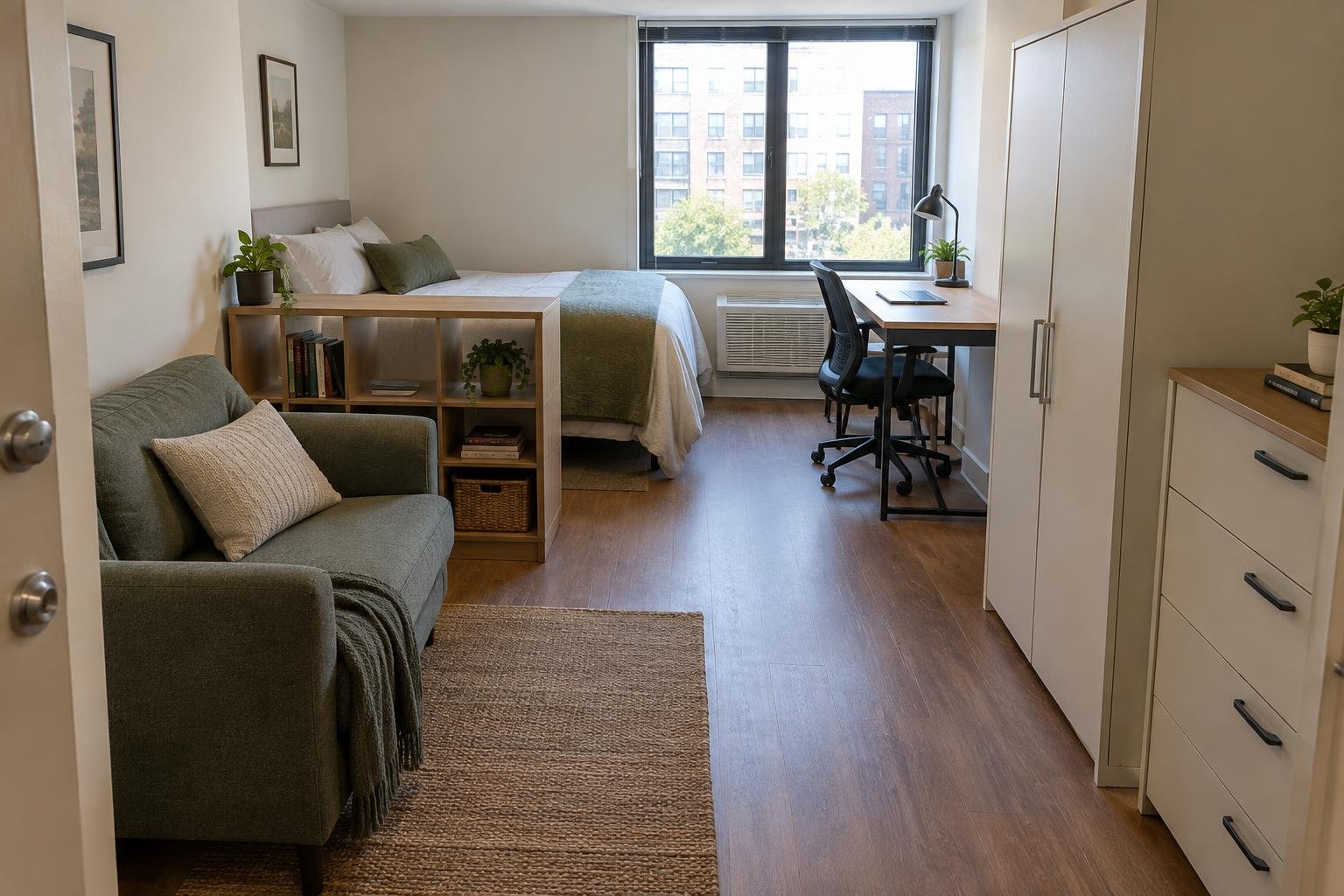
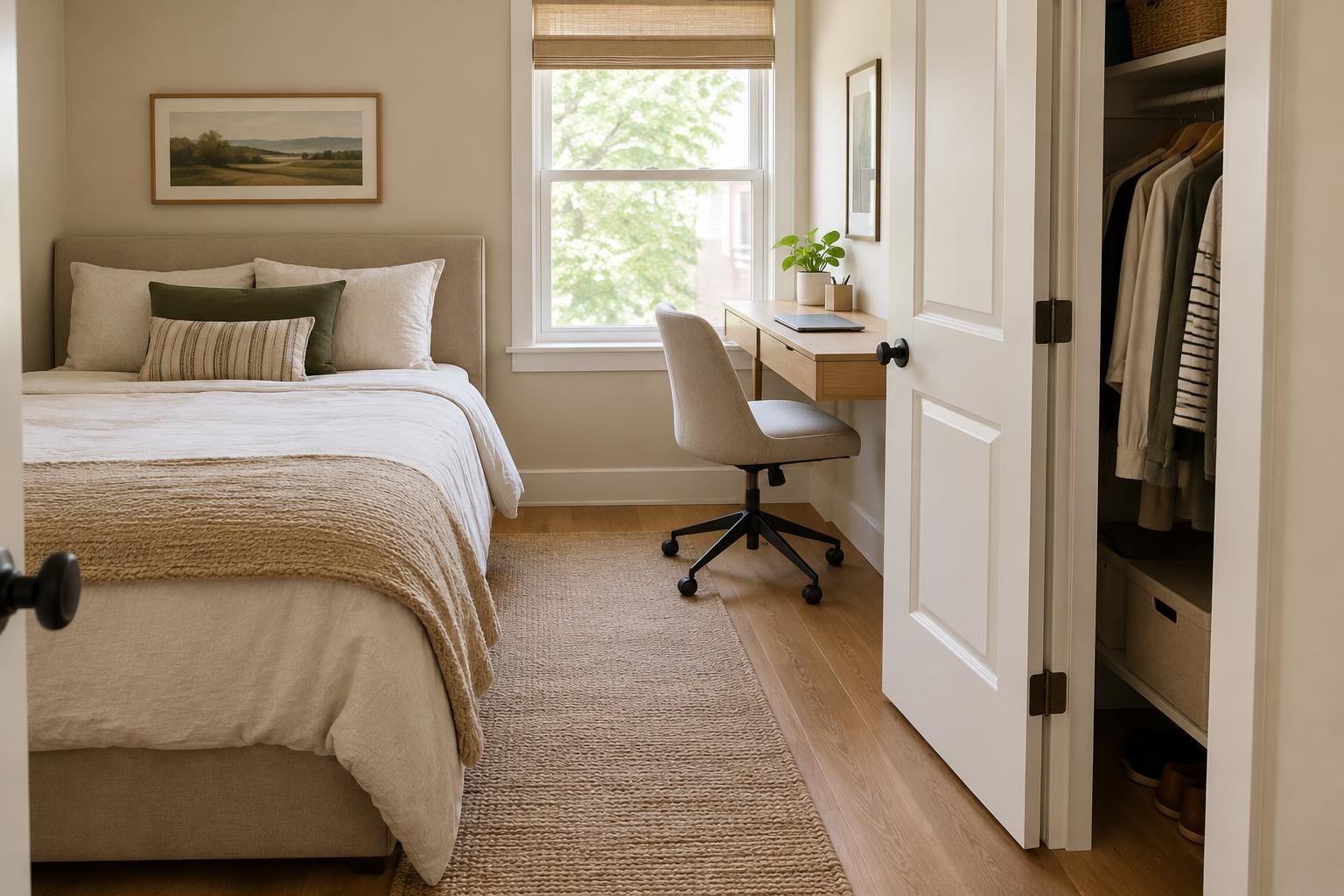
Room images are AI-generated layout and style ideas, not measured installations or photographs of the products linked below.
Can a full-length mirror go on the back of a bedroom door?
Yes, with a mirror and hanging system made for your door. In A, the mirror hangs on the room side of the entry door. The bed stays on the left, the desk stays below the window and the wardrobe stays beside it. The floor beside the bed becomes the place to check your outfit.

Choose this if: the walls are occupied and you normally close the door to get dressed. It leaves the narrow wall beside the door free. The tradeoff: your mirror moves with the door. Someone entering can interrupt the view, and an unsuitable hanger can stop the door closing or make the mirror knock against it.
- Close the door and stand where you would dress. Can you see your head and shoes without stepping onto the bed or moving the desk chair each time?
- Open the door slowly through its normal range. Check the mirror edge, handle, wall and nearby furniture.
- Check the door thickness, clearance above the door, hanger fit and the door manufacturer’s restrictions. The door must latch normally; never force it against the hooks.
If your door needs to stay open for a pet, another person or frequent trips to the closet, start with B.
Where can a wall mirror fit without blocking the closet?
Look for a narrow wall with an open viewing spot in front of it. In B, the mirror moves from the door onto the wall strip between the wardrobe recess and the door. The three main furniture pieces stay in their original positions. There is no easel or base on the floor.

Choose this if: you want the mirror available while the bedroom door is open. In this concept, the hinges are on the far side of the door, so it opens away from the mirror wall. The tradeoff: the wall must accept the specified fixings, and you need permission to mount it. A strip that looks empty may sit behind your open door.
- Open the bedroom and wardrobe doors fully. Reject a spot that is covered or struck by either door.
- Pull out the closest drawer and your desk chair. Stand in the viewing spot, turn sideways and take a step back.
- Walk from the door to the bed carrying a laundry basket. The mirror’s frame and your standing position should not force you into furniture.
A wall mirror removes the floor stand, not its own depth. Measure the frame’s projection as well as its width. If every suitable wall is blocked, keep an existing full-length mirror in the hallway or another dressing spot instead of forcing one into the bedroom.
How much space do you need in front of a full-length mirror?
Use the place where you can comfortably stand and see the view you need. There is no single viewing distance that solves every combination of mirror size, mounting height and body height.
- Mark the proposed frame size with paper or a tape outline suitable for the surface. This tests fit and collisions, not the reflection.
- Mark your standing spot on the floor. Check it with the chair pulled back, storage open and the bed made as you normally use it.
- Confirm the view before final fixing. Follow the product’s installation process to check mounting height; for a heavy or awkward mirror, use the help the instructions call for. Do not balance it unsecured for a test.
Check daylight and evening lighting too. A reflection of the window may brighten the scene, but a glare-filled view is not helpful for getting dressed. If you dislike seeing the bed reflected at night, check the proposed spot from your pillow before mounting.
Which mirror should you buy—if you need one?
Choose the position first. Then match the mirror’s mounting method, overall dimensions and hardware to it. These are specification references; the illustrated mirrors are not exact product renders.
For A: a purpose-made door mirror
Target’s Room Essentials 14.81 × 50.75-inch Over the Door Mirror lists an overall depth of 0.75 inches and a weight of 5.85 lb. Its supplied hooks are specified for doors 1⅜–1⅞ inches thick. That range does not establish clearance above your door. Check that separately and follow the included instructions.
The linked selection is white; verify the selected color and size. Check the door mirror’s dimensions and hardware at Target ↗
For B: a slim mirror approved for wall mounting
The black Umbra Hub Leaning Mirror, model 1013215-040, is also designed for vertical wall mounting. Its official dimensions are 62 inches high × 14.5 wide × 1.88 deep. Umbra says it must not be hung horizontally. Use the wall-mount method specified for your wall; leaning it would use floor space again.
These are ordinary manufacturer/retailer links, not paid links. Confirm the exact option and current availability on the destination site. For any mirror, use the intended hardware and suitable fixings for the surface; do not improvise adhesive mounting for a heavy glass mirror. Ask the manufacturer or a qualified installer when the door or wall is unsuitable.
Keep the layout. Change the colors.
Cobalt + white + chrome: use a striped duvet or throw with your current white sheets, and repeat the blue in one print. Burgundy + powder blue: keep the same furniture and try a dark quilt with pale-blue pillowcases. You can use either palette with either mirror position; paint and new furniture are optional.
For more color and furniture priorities, explore the existing small-bedroom layout and style choices.
What still gets in the way?
If the mirror fits but you cannot use the room comfortably, solve the next obstruction:
- Bed, desk and storage still compete for space → compare five starting layouts.
- Your bedside essentials have nowhere to go → compare a small table and a clamp-on shelf.
Your first move: test the door with nothing added. If closing it gives you a usable viewing spot, check A’s hardware fit. If the door must stay open, test B’s wall and standing spot.
Further reading: Julie Rose’s small-bedroom reveal shows a narrow full-length mirror between a closet and a bedroom door. Apartment Therapy’s door-mirror guide explains why door thickness, top clearance and opening range matter.