Keep the carpet—and make the room feel more like you. Compare a textile-only change with one removable rug layer, then check which approach fits your bedroom.
A: no extra layer · B: one rug zone · Before buying

First, separate a style problem from a floor problem
This comparison is for serviceable carpet you simply do not like. Check its condition and your rental rules first. Dampness, persistent odor, loose edges or exposed sharp tacks need attention before decorating; covering them with a rug is not a repair.
Look at your carpet in daylight, then pull out bedding, throws and cushion covers you already own. Try a color you like against it before buying anything. Neither option needs new flooring, painted walls or different furniture.
A. Style around it: keep the floor as it is

Fit. Start here when the door already passes close to the carpet, the room has very little spare floor, or you do not want to move a bed to position and maintain a large rug. This option adds no rug edge or extra thickness to the walking route.
Style. Make the bed the main color area. The lavender quilt relates to the cooler side of the taupe carpet; a plum stripe and chartreuse cushion give your eye somewhere more interesting to land. Keep the larger background pieces simple so the floor does not compete with lots of small patterns.
Try it. Swap one cover or throw first, then look from the doorway. If you prefer the room without another floor layer, stop there. You do not need to buy an area rug just because the carpet is not your favorite color.
B. Layer one rug: give the bed a different base
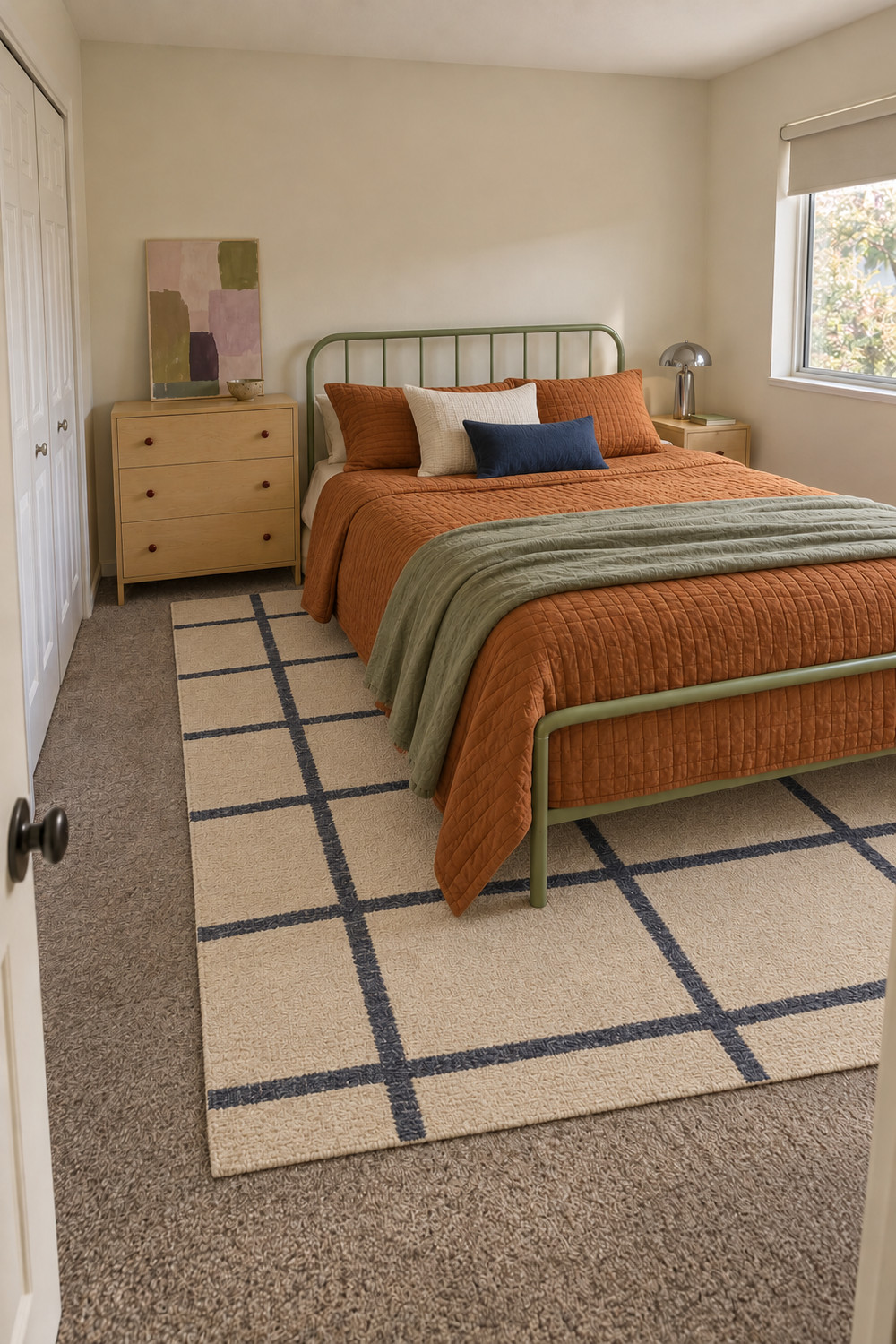
Fit. Consider this only if the exact rug and pad are suitable for your type of carpet, the combined layer lies flat, and doors and furniture still operate. A rug that grips a hard floor can still bunch or creep on carpet. A product labeled “non-slip” is not enough information on its own.
Place it. Mark a possible rectangle before ordering, including the full door swing, closet access and route out of bed. In this idea, the rug sits under the lower bed area and stops before the entry. Measure your own room; the picture does not establish a usable clearance.
Style. A large cream field with an indigo grid changes the visual balance of the floor. Rust bedding and a sage throw make the bed feel warmer against it. The rug need not hide every inch of carpet: the exposed border helps this remain a removable layer rather than a pretend new floor.
Choose the method, then borrow either palette
Choose A if you want to avoid another floor layer or an expensive rug purchase. Choose B if covering a defined area matters enough to justify the fitting, moving and cleaning routine. The lavender palette can go with a suitable rug, and the rust palette can work without one.
Start with the rug you already own if its maker approves it for this use. Do not assume a thin washable rug, a heavier rug or furniture on top will automatically solve movement. Remove the layer if an edge curls, ripples or keeps shifting.
Before buying a rug or pad
Check the surface. Confirm that both makers allow the exact rug backing and pad on your carpet’s fiber and pile. Pads made only for hard floors are a different choice.
Check the full stack. Account for carpet, pad and rug together, including edges and door movement. Follow the exact pad’s sizing and trimming instructions. Do not add tape, adhesive or extra layers to force a poor fit.
A manufacturer reference: RugPadUSA Carpet Lock is designed for rugs over wall-to-wall carpet, with textured felt toward the carpet and rubber toward the rug. Its current product selector displays a ¼-inch option, while its layering guide describes 7/16 inch. Confirm the exact current option and compatibility before ordering. This is a product-type reference, not an identified pad or rug from the pictures.
Plan the upkeep. Leave a way to lift the rug and clean underneath according to the makers’ instructions. If doing that means a bed move you cannot manage, A may be the better everyday choice.
Try the decision in this order
1. Check the existing carpet and rules. 2. Try textiles you own. 3. Mark and measure a rug zone only if you still want one. 4. Verify the actual rug-and-pad combination before buying, then check doors, closet access and movement in your room.
AI styling concepts; room dimensions, rug stability and installation conditions have not been tested.
More ways to make a rental bedroom work
For a different rental restriction, compare two no-drill lighting setups or window-covering options for exterior light.
The real questions behind this comparison
A renter asks how to decorate around carpet they cannot remove; commenters discuss both color and rugs. A separate fixed-carpet bedroom discussion draws interest in using a complementary rug, although that poster is not identified as a renter. In a Los Angeles rental tour, the resident also names the carpet as a feature they dislike. These individual experiences explain the question; they do not test either illustrated setup.